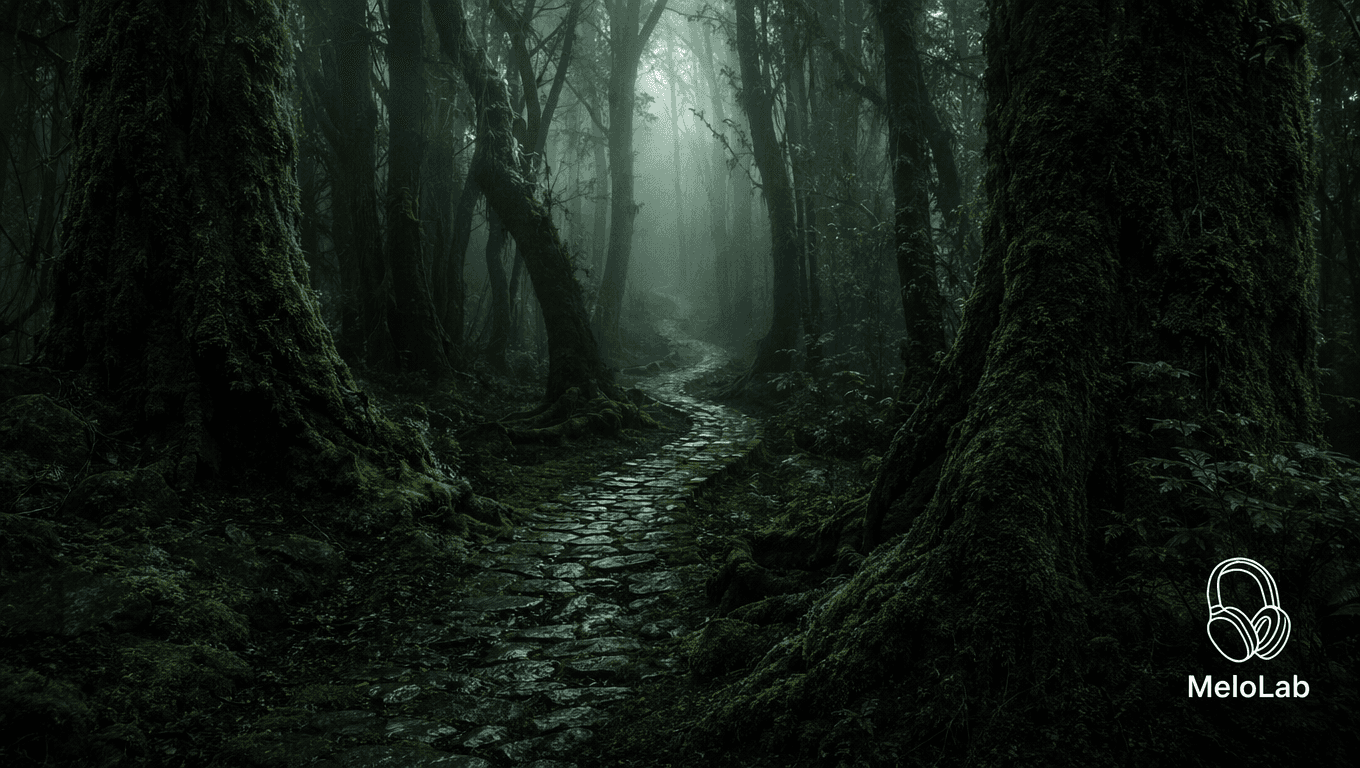
Mysterious music thrives on the unresolved. It withholds satisfaction, keeping listeners in a state of anticipation and curiosity by using harmonic progressions that avoid clear resolution, melodic phrases that trail off rather than conclude, and rhythmic patterns that suggest movement without revealing direction. The instrumental palette for mysterious music is distinctive — pizzicato strings pluck their way through shadowy themes, muted trumpets add jazz-tinged noir atmosphere, and unusual instruments like the celeste, music box, and harpsichord create an unsettling sense of the familiar made strange. Ticking clock sounds, metallic resonances, and distant, unidentifiable textures add layers of subtle tension. Tempos are moderate, around 80 to 100 BPM, creating a sense of cautious movement through uncertain territory. The result is music that asks questions without answering them, keeping the listener perpetually curious.
The demand for mysterious music spans storytelling media of all kinds. True crime podcast producers — one of the fastest-growing content categories — rely heavily on mysterious underscore music to maintain suspense during investigations, witness interviews, and dramatic revelations. Escape room designers and puzzle game developers use mysterious ambient tracks to keep players engaged and slightly on edge as they work through challenges. Noir film directors and thriller screenwriters need mysterious scoring for detective sequences, stakeout scenes, and moments of revelation. Board game cafes and immersive theater productions use mysterious background music to create atmospheric environments where guests feel transported into a story. Corporate presenters even use mysterious music in product reveal events to build anticipation before announcements.
With MeloLab's AI mysterious music generator, creating the perfect atmosphere of intrigue is straightforward. The model has been trained on the tropes and techniques of mystery scoring — unresolved harmonies, pizzicato textures, noir jazz elements, and evolving tension arcs. It understands how to balance subtlety with engagement, producing music that keeps listeners curious without becoming distracting or overwhelming.
For the most evocative mysterious tracks, describe the specific scenario — "detective examining clues in a dimly lit office," "exploring an ancient ruin," "waiting for a verdict." Mention instruments that fit your vision — muted trumpet for noir, pizzicato strings for classic mystery, or electronic textures for modern thriller. Indicate the tension level you want, from gentle curiosity to gripping suspense, and specify whether the track should build or maintain a steady level of intrigue throughout.