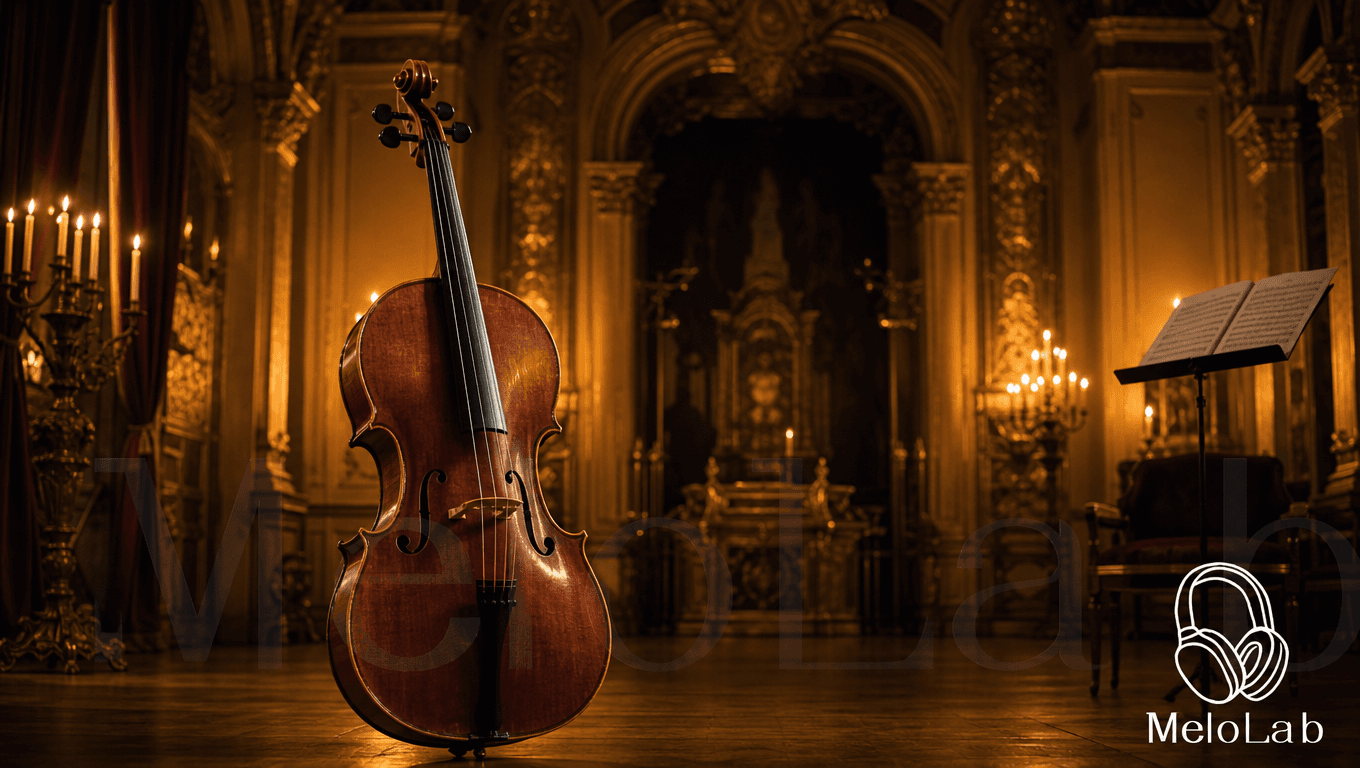
The cello is often described as the instrument that most closely resembles the human voice, and for good reason. Its range spans roughly that of a tenor or baritone singer, and its warm, resonant tone possesses a depth of emotion that can move listeners to tears with a single sustained note. The cello's large body produces a rich fundamental with complex overtones, giving it a sonic presence that is simultaneously powerful and intimate. Whether playing the introspective Sarabande from a Bach suite, anchoring a string quartet with its deep register, or soaring over an orchestral backdrop in a film score, the cello communicates emotion with a directness that few instruments can match.
Cello music thrives across several major genres. Classical music is the cello's natural home — from the unaccompanied suites of Johann Sebastian Bach, which are widely considered among the greatest compositions for any instrument, to the Romantic concertos of Dvorak, Elgar, and Schumann that showcase the instrument's full expressive range. Chamber music places the cello at the heart of string quartets and piano trios, where it provides harmonic foundation, countermelody, and solo passages in equal measure. Film and media scoring have embraced the cello as a go-to instrument for emotional depth — a solo cello line can convey grief, longing, dignity, or quiet triumph with an immediacy that words cannot. Neoclassical and ambient music have expanded the cello's vocabulary with electronic processing, extended techniques, and minimalist repetition, creating soundscapes that are both ancient and modern.
MeloLab's AI cello music generator has been trained on a wide range of cello performances spanning Baroque, Classical, Romantic, cinematic, and contemporary styles. The model produces cello music with realistic bowing technique, vibrato, and dynamic shading — from delicate pianissimo sustains to powerful fortissimo passages. When you describe the character and context you need, the AI generates an original cello composition that captures the instrument's deep emotional resonance.
For the most compelling cello tracks, be specific about the style and emotional register. "Bach-style unaccompanied suite movement with arpeggiated chords and Baroque ornamentation" is very different from "cinematic solo cello with piano and strings building to a dramatic climax." Mention the playing technique where relevant — "legato bowing with wide vibrato" versus "pizzicato with light rhythmic pulse" — since the cello's timbre changes dramatically with technique. Describe the ensemble context: solo cello, cello with piano, cello with string orchestra, or cello with ambient electronics each create a distinct sonic world. Including a key, tempo, and reference composer or film score helps the AI calibrate its harmonic language and emotional intensity.