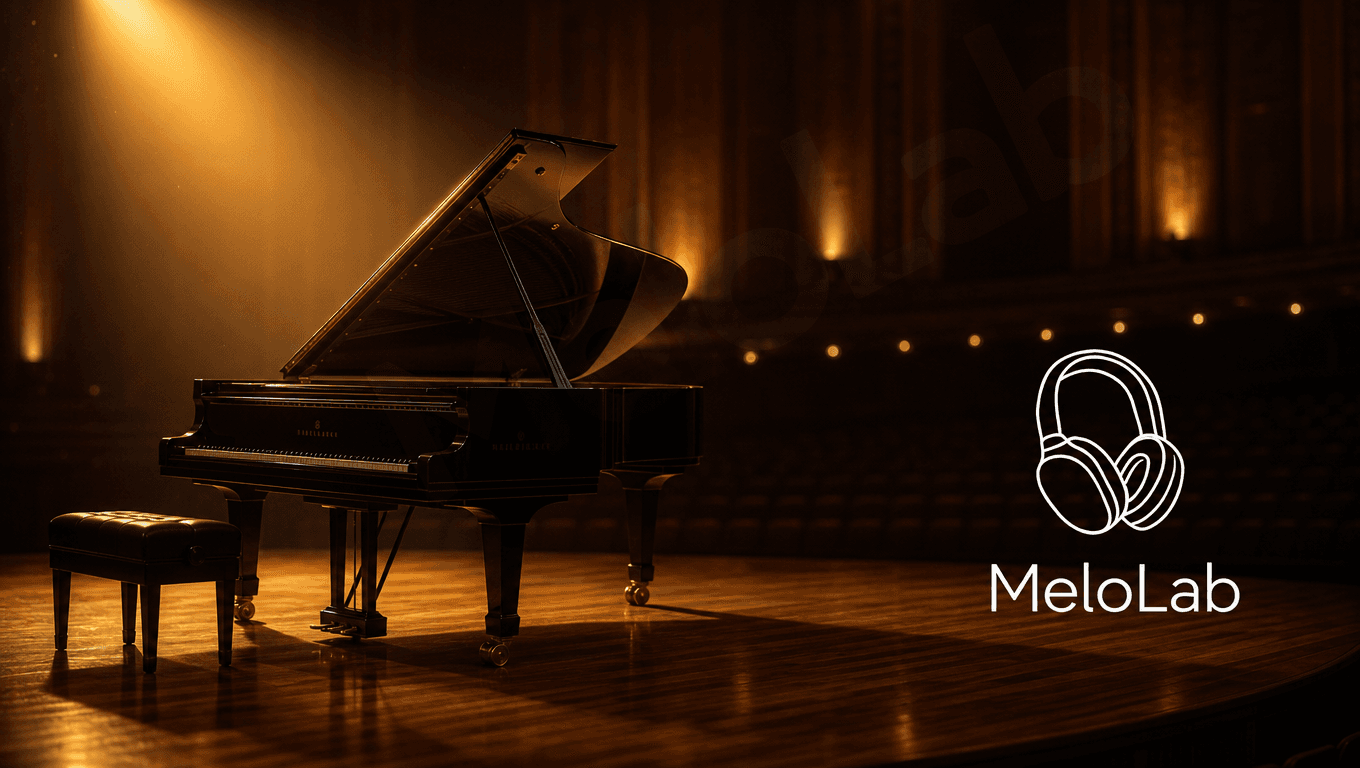
The piano is one of the most versatile and widely played instruments in the world, capable of producing everything from delicate, whisper-soft melodies to thunderous, orchestral crescendos. With a range spanning over seven octaves, the piano offers an unparalleled breadth of expression that has made it central to classical composition, jazz improvisation, pop songwriting, and film scoring alike. Its ability to play multiple notes simultaneously — chords, arpeggios, and counterpoint — gives it the power to function as both a solo instrument and a complete accompaniment, which is why it remains foundational in virtually every genre of Western music.
Piano music thrives across a remarkable spectrum of genres. In classical music, the instrument has been the vehicle for some of history's greatest compositions, from Bach's contrapuntal fugues and Mozart's elegant sonatas to Chopin's poetic nocturnes and Liszt's virtuosic showpieces. Jazz piano transformed the instrument into a tool of spontaneous creation, with legends like Bill Evans, Thelonious Monk, and Keith Jarrett developing distinct improvisational voices that blended harmonic sophistication with emotional depth. Neoclassical and ambient piano have surged in popularity over the past decade, with artists like Nils Frahm, Ludovico Einaudi, and Max Richter crafting minimalist compositions that emphasize space, repetition, and quiet beauty. Pop ballads and film scores rely heavily on piano for emotional weight — a simple piano melody can convey heartbreak, triumph, nostalgia, or wonder with an immediacy few other instruments can match.
MeloLab's AI piano music generator analyzes patterns from thousands of piano performances across classical, jazz, ambient, and contemporary styles. When you describe the mood, tempo, and character you want, the model synthesizes an original composition that incorporates realistic dynamics, pedal technique, and phrasing. Whether you need a gentle neoclassical study in E minor, a swinging jazz ballad with rich chord voicings, or a cinematic piano theme with orchestral strings, the generator creates music that sounds like it was performed by a skilled pianist rather than assembled from loops or templates.
To get the best results from the piano generator, be specific about the style and emotional character you are after. Mentioning a key signature or tempo gives the AI a clearer framework — for instance, "a melancholic piano piece in C minor at 70 BPM with flowing arpeggios" will produce a more focused result than simply "sad piano music." Referencing specific pianists or composers (Chopin, Debussy, Bill Evans) helps the model calibrate its harmonic language and phrasing style. If you need piano with accompaniment, describe the ensemble — "solo piano with string pad accompaniment" or "piano trio with bass and drums." And do not overlook dynamic markings and articulation cues like "soft pianissimo verses building to fortissimo choruses" or "legato melody with staccato accompaniment," since these details shape the expressiveness and realism of the generated performance.