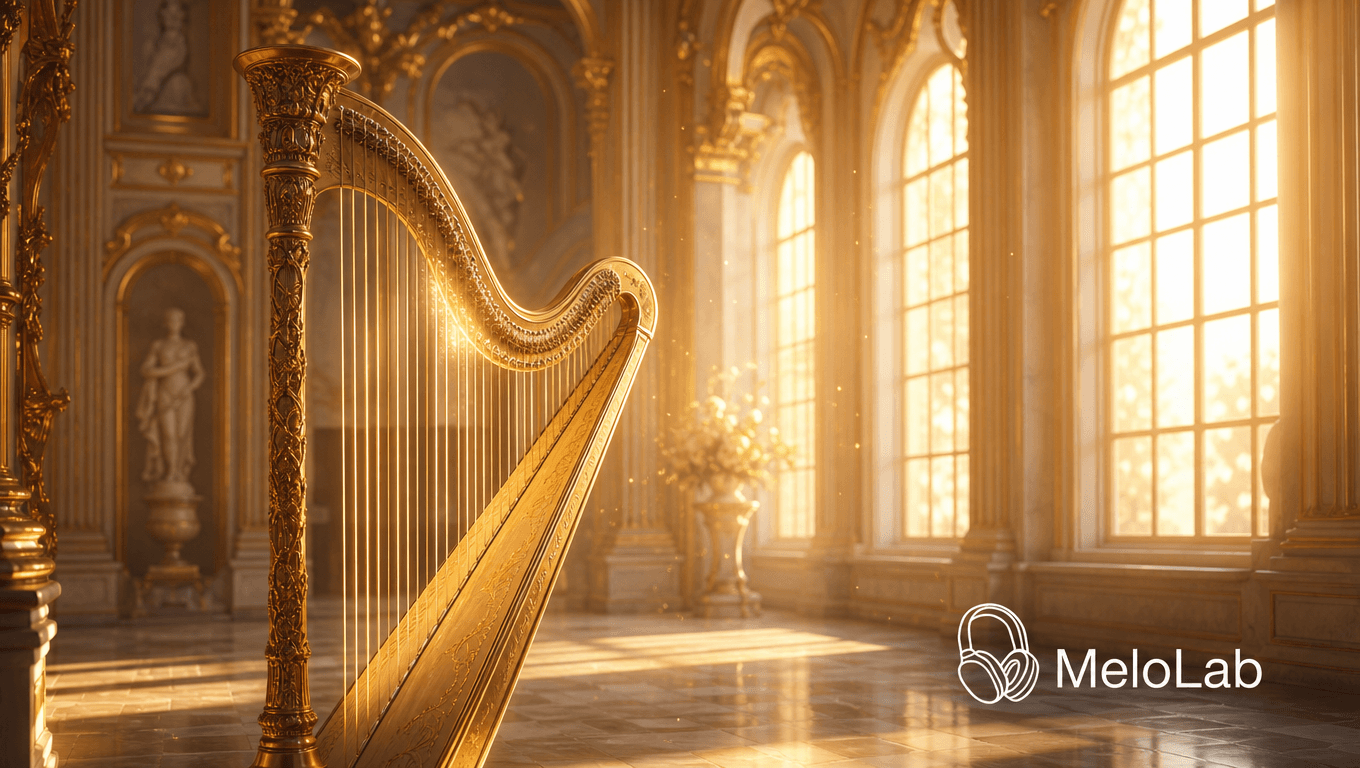
The harp is one of the most ancient and enchanting instruments in existence, with a history stretching back over five thousand years to Mesopotamia and ancient Egypt. Its sound — produced by plucking strings that resonate through a wooden soundboard — has an ethereal, crystalline quality that seems to suspend time. The concert pedal harp, with its forty-seven strings and seven pedals, can play in any key and produce a vast range of colors through techniques like pres de la table (playing near the soundboard for a metallic tone) and harmonics (producing bell-like overtones). The Celtic lever harp, smaller and more intimate, carries centuries of Irish, Scottish, and Welsh musical tradition in its warm, resonant strings. Whether heard in a symphony orchestra, a Celtic session, or a meditation studio, the harp creates an atmosphere of beauty and tranquility that is unmatched by any other instrument.
Harp music thrives across several distinct genres and traditions. Classical music has featured the harp prominently in orchestral works by composers like Ravel, Debussy, and Tchaikovsky, who exploited its glissando capability and lush arpeggiation for coloristic effect. Solo harp repertoire spans from Baroque dances to contemporary compositions that push the instrument into new sonic territory. Celtic harp music is a living tradition in Ireland, Scotland, and Wales — flowing arpeggios, modal melodies, and the warm resonance of gut or nylon strings create music that is deeply connected to landscape and memory. Ambient and new-age music have embraced the harp for meditation, relaxation therapy, and spa environments, where its sustained, gentle tones create a sense of peace and spaciousness. Film scoring frequently uses the harp for fantasy, fairy-tale, and magical sequences — its celestial quality instantly conjures otherworldly atmospheres.
MeloLab's AI harp music generator understands the instrument's unique sonic vocabulary and produces compositions with realistic string resonance, natural decay, and the harp's signature cascading quality. The model captures the difference between a classical pedal harp arpeggio and a Celtic lever harp air, between a meditation glissando and a Baroque dance movement. When you describe the style and mood, the AI generates original harp music with the instrument's distinctive ethereal beauty.
For the best harp music, describe the harp type and tradition in your prompt. "Celtic lever harp with modal tuning" differs from "classical concert pedal harp with full chromatic range." Specify the emotional character — "nostalgic and gentle," "magical and mysterious," or "serene and meditative" — since the harp's emotional range is central to its appeal. If you are creating music for meditation or relaxation, mention the intended use and pace. For film scoring, describe the scene or atmosphere. Include tempo and indicate whether the harp should be solo or accompanied by other instruments like strings, celeste, or soft percussion.