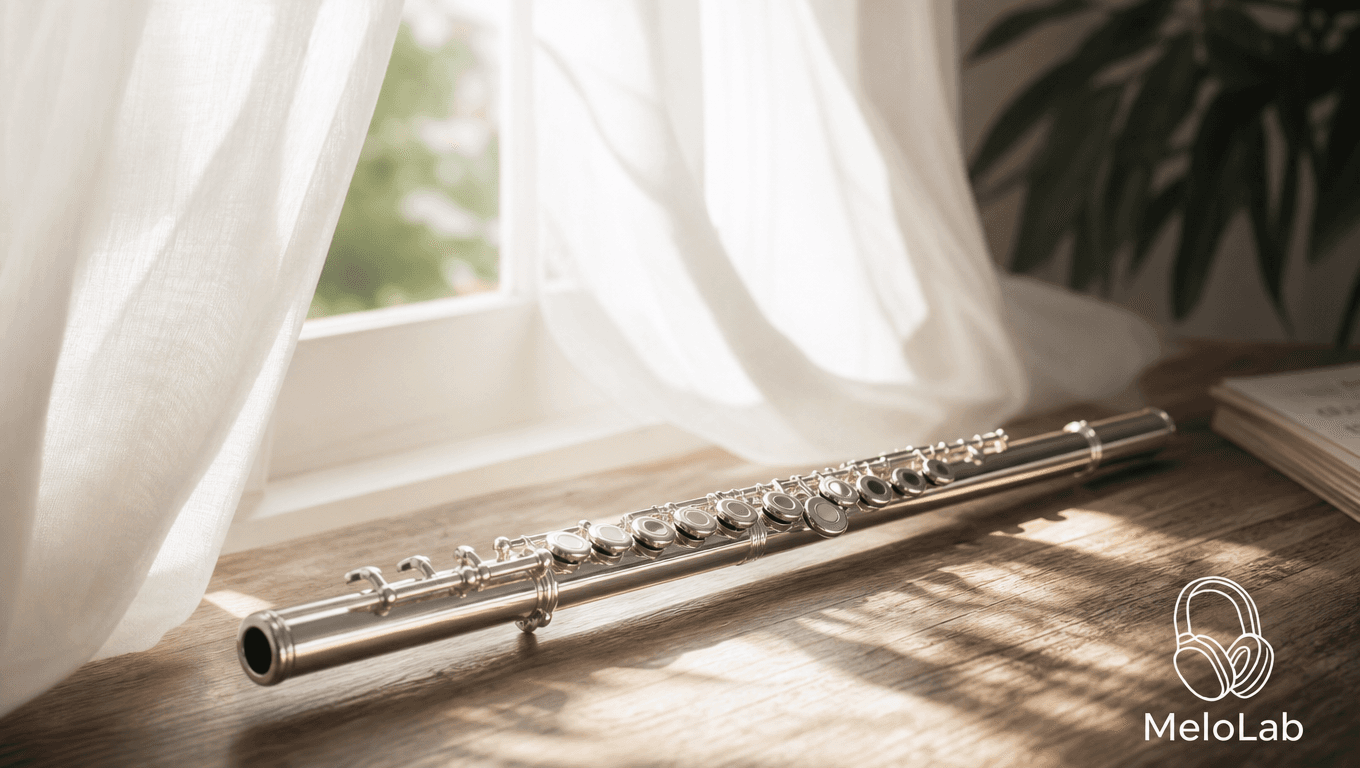
The flute is one of humanity's oldest instruments — a simple tube transformed by breath into a singing voice that has carried melodies across cultures and centuries. The modern concert flute, with its silver body and Boehm key system, produces a tone that can be silvery and brilliant or warm and breathy, depending on the player's embouchure and air speed. But the flute family extends far beyond the orchestral instrument: the Irish tin whistle, the Japanese shakuhachi, the Native American flute, the Andean quena, and the pan flute all belong to this ancient lineage. What unites them is the direct connection between the player's breath and the sound — the flute is, more than almost any other instrument, an extension of the human voice, which gives it an intimacy and expressiveness that listeners feel viscerally.
Flute music flourishes in a variety of genres and traditions. Classical music has been central to the flute's identity since the Baroque era, when composers like Bach and Handel wrote elaborate obbligato parts and sonatas that showcased the instrument's agility and singing tone. The flute remains a staple of the orchestra, performing everything from delicate, atmospheric solos to brilliant, technically demanding concertos. Celtic music relies on the flute and tin whistle for some of its most iconic melodies — the flowing, ornamented airs and lively dance tunes of Irish and Scottish tradition are inseparable from the sound of the wooden flute. Ambient and new-age music have embraced the flute for its ability to create ethereal, meditative textures, often pairing it with reverb, nature sounds, and electronic processing. Jazz flute has a distinguished history, from Herbie Mann's bossa nova-inflected playing to the psychedelic flute solos that defined a certain era of 1970s fusion.
MeloLab's AI flute music generator captures the instrument's diverse voices with realistic breath phrasing, vibrato, and tonal variation. The model understands the difference between a precise Baroque trill and a free-flowing ambient melody, between a lively Celtic reel and a meditative shakuhachi improvisation. When you describe the style and mood, the AI generates original flute music with the nuance and character of a live performance.
For the best flute music from the generator, specify the flute type and style. "Classical transverse flute" sounds very different from "Irish tin whistle" or "bamboo flute" — each has its own timbre and phrasing vocabulary. Describe the accompaniment context: "solo flute with harp" creates a Celtic or classical setting, while "flute over ambient synth pads" suggests a meditative, new-age atmosphere. Mentioning the emotional quality is especially effective for flute — "haunting and nostalgic," "bright and playful," or "serene and meditative" will shape the melodic contour and dynamics. Include tempo and key for further control, and reference traditions or artists to guide the stylistic approach.