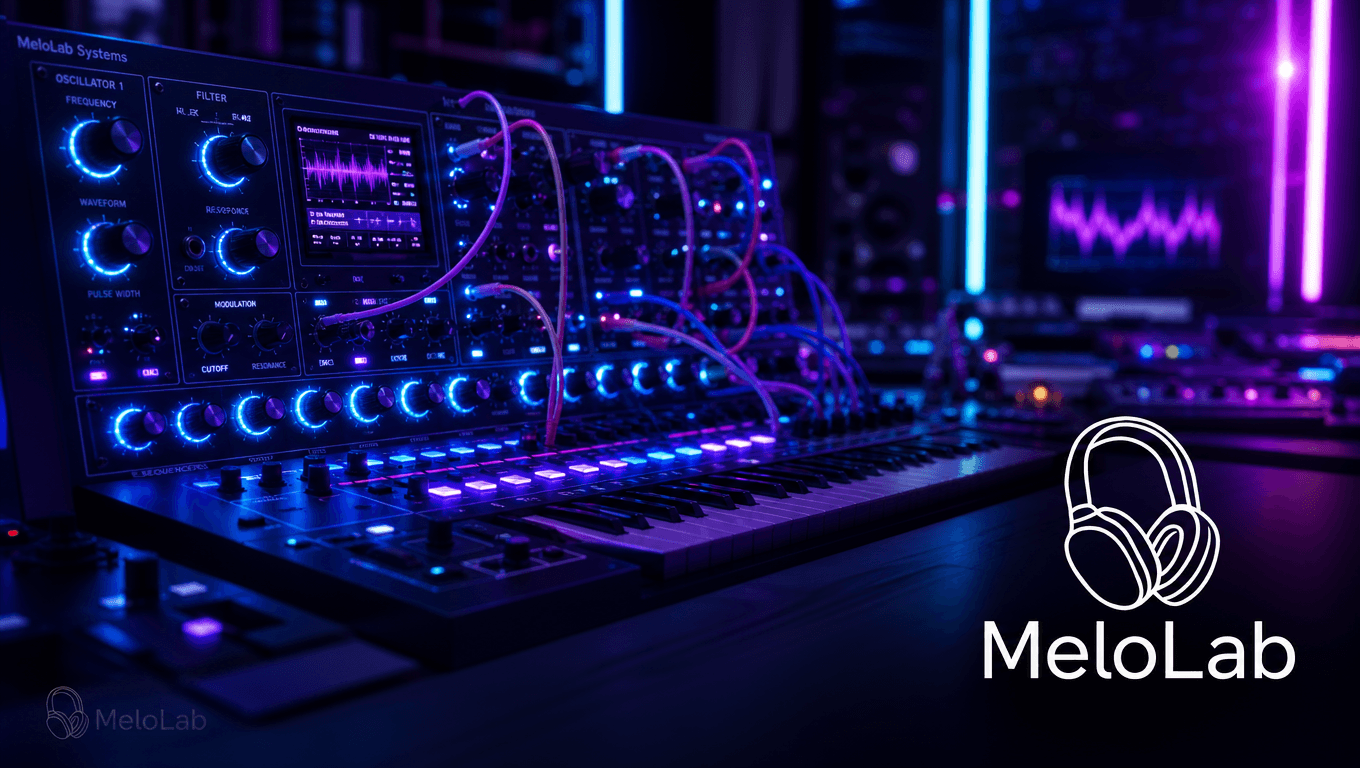
The synthesizer revolutionized music in the twentieth century and continues to define the sound of the future. Unlike acoustic instruments, whose tones are bounded by physical properties, synthesizers can generate virtually any sound imaginable — from warm, analog pad textures that seem to hang in the air like fog to razor-sharp digital leads that slice through a mix with surgical precision. Since Robert Moog built his first voltage-controlled synthesizer in the 1960s, synths have powered genres from progressive rock and krautrock through synth-pop, house, techno, trance, and the sprawling universe of electronic dance music. Today, synthesizer music is not a niche — it is the lingua franca of pop production, film scoring, and experimental art music alike.
Synth music encompasses an enormous stylistic range. Synthwave and retrowave look backward with nostalgia, channeling the analog warmth and pulsing arpeggios of 1980s film soundtracks and video game music into a modern aesthetic that pairs neon-soaked melodies with driving drum machines. Ambient synth music creates immersive, slowly evolving soundscapes that prioritize texture and atmosphere over traditional melody or rhythm — artists like Brian Eno, Aphex Twin, and Stars of the Lid have shown how synthesizers can create spaces of profound beauty and contemplation. Techno and house music are built on synthesizer repetition — hypnotic sequences, acid squelch, and deep bass patterns that sustain energy on dance floors for hours. Vaporwave, chillwave, and lo-fi synth pop a warm, hazy aesthetic that blends nostalgia with dreamlike detachment.
MeloLab's AI synth music generator captures the breadth of synthesizer music by understanding the specific sound design vocabulary of each genre. The model does not just layer generic pad sounds — it creates synth compositions with evolving modulation, authentic filter sweeps, rhythmic sequencing, and the textural depth that makes great electronic music compelling. Whether you need a retro synthwave anthem, a meditative ambient piece, or a driving techno track, the generator produces original electronic music with genuine sonic character.
To get the best synth music from the AI, describe the synth aesthetic you are after. Specify the era — "warm 1970s analog synth" versus "crisp modern digital FM synthesis" — and the genre context. Mention the core elements: "pulsing bass arpeggio with lush pads and drum machine" gives the AI a clear structural blueprint. Include tempo and mood — "dreamy ambient synth at 60 BPM" versus "high-energy techno at 135 BPM" — and reference artists or tracks for stylistic calibration. You can also specify the sonic character of individual elements: "TB-303 acid bass line," "Junopad supersaw lead," or "granular textured ambient pad" will shape the sound design direction of the generated track.