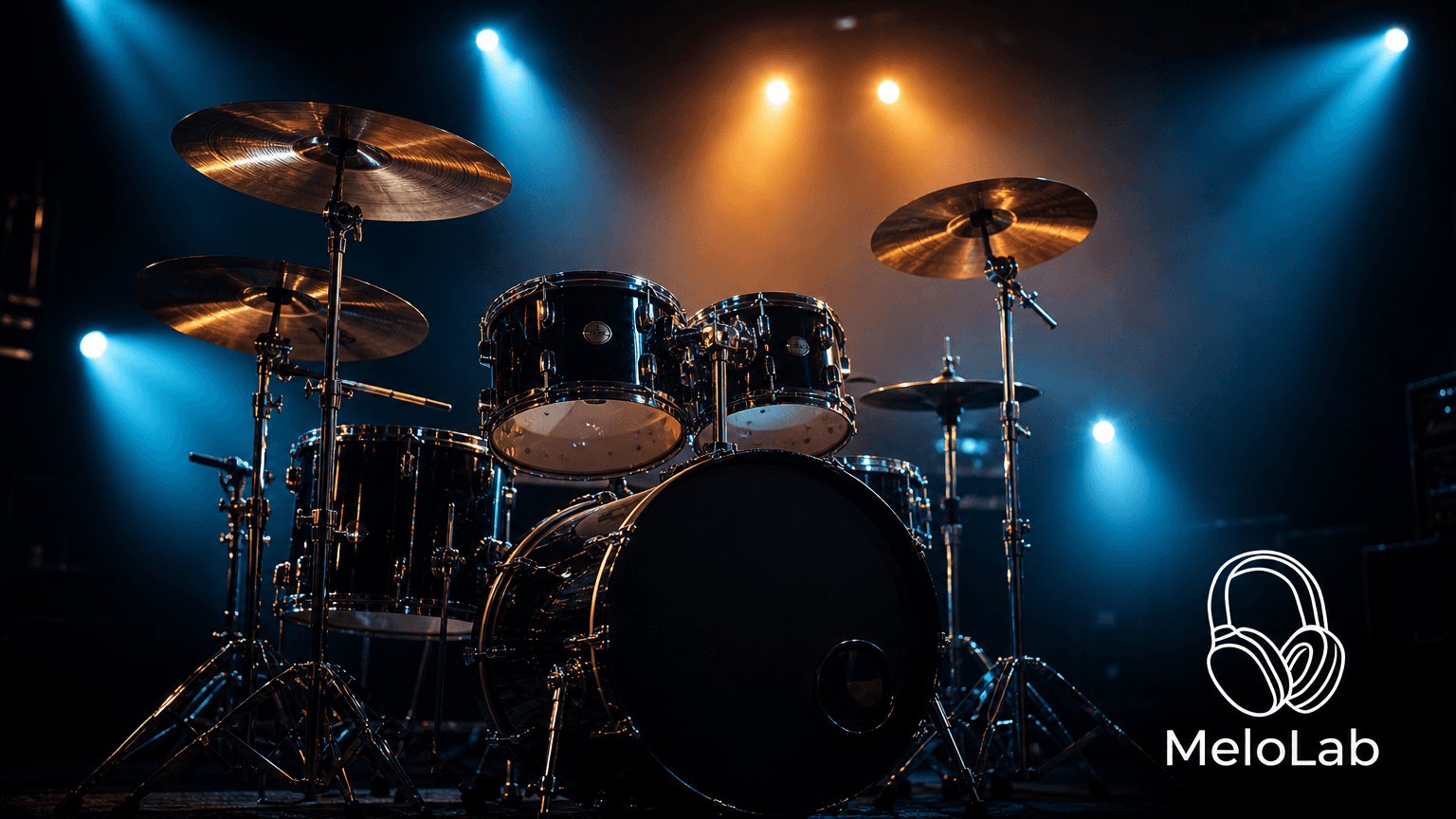
Drums are the heartbeat of virtually all modern music. Whether acoustic or electronic, drum tracks provide the rhythmic foundation that drives a song forward, establishes its groove, and anchors every other instrument. A well-crafted drum pattern does more than keep time — it creates feel, tension, and release through the interplay of kick, snare, hi-hat, and cymbals. From the subtle ghost notes of a funk shuffle to the thunderous double-kick assault of metal, from the syncopated polyrhythms of West African drumming to the four-on-the-floor pulse of house music, drums define the character and energy of a track like no other element.
Different genres demand fundamentally different drumming approaches. Hip-hop and trap rely on punchy, compressed snares, rapid hi-hat rolls, and deep 808 kick drums that shake the subwoofers. Rock drumming centers on powerful kick-snare patterns with crashing cymbals and energetic fills that drive choruses home. Jazz drumming is a study in nuance — brushwork, ride cymbal patterns, and dropped bombs on the kick drum create a flowing, conversational rhythmic backdrop. Electronic dance music spans a vast spectrum, from the hypnotic minimal techno pulse to the breakbeat chaos of drum and bass, each with its own signature drum programming vocabulary. Latin percussion traditions bring congas, bongos, timbales, and cowbells into the mix, creating complex layered rhythms that move the body in ways a standard drum kit alone cannot.
MeloLab's AI drum music generator understands these genre-specific conventions and produces drum tracks that groove naturally rather than sounding mechanically quantized. The model incorporates realistic velocity variation, ghost notes, and micro-timing adjustments that give programmed drums a human, live-played feel. You can generate everything from a simple boom-bap loop to a full acoustic drum performance with verse-chorus dynamics and transitional fills.
To get the most out of the drum generator, be specific about the genre and feel you need. Mention tempo explicitly, since a 90 BPM boom-bap pattern and a 140 BPM trap beat are worlds apart. Describe the kit — "tight, dry snare with minimal reverb" sounds very different from "big, roomy snare with natural reverb." If you need a specific groove, reference it: "dilla-style off-kilter hip-hop swing" or "straight-ahead Motown four-on-the-floor." For electronic drums, specify the aesthetic — "TR-808 kick and snare with closed hi-hats" versus "live acoustic drum kit with room mics." You can also request structural elements like "build from a sparse hi-hat intro to a full kit in the chorus" to get drum tracks with dynamics and arrangement rather than a static loop.