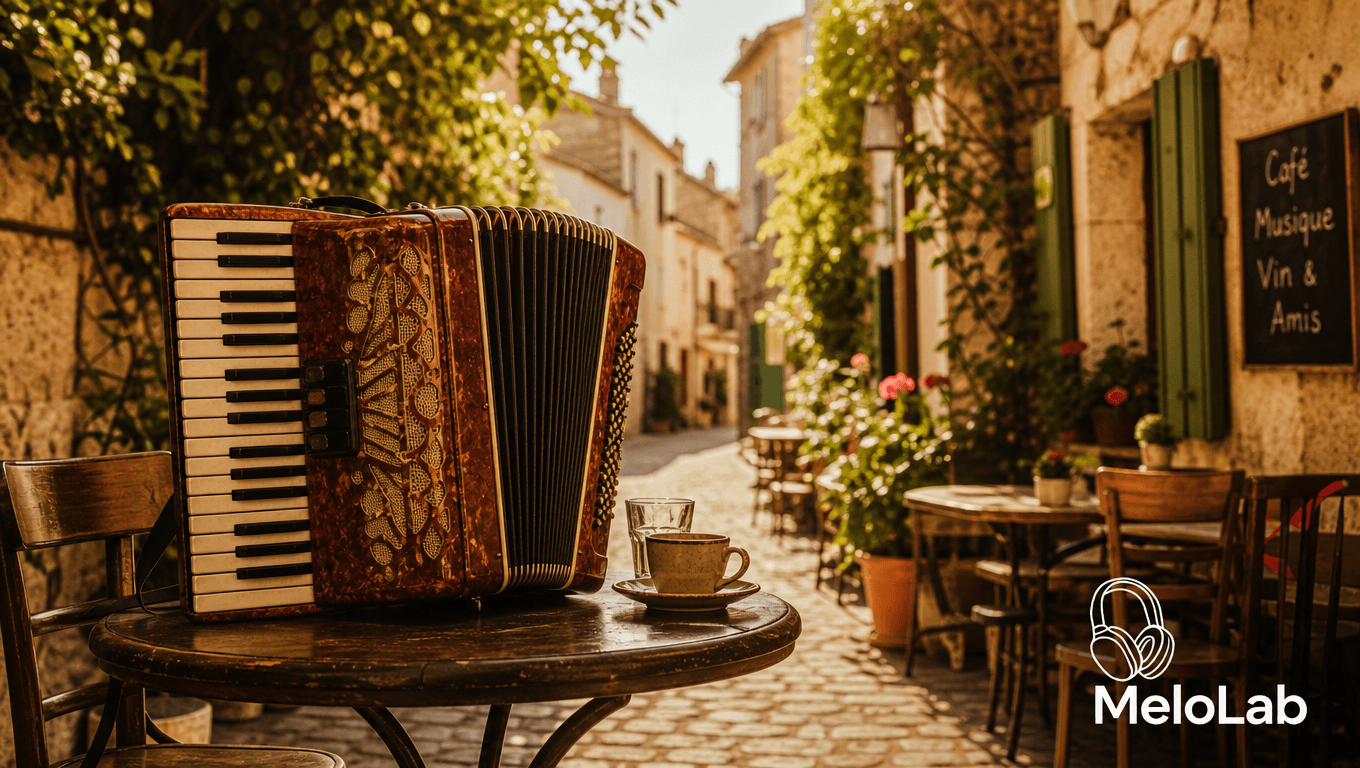
The accordion is an instrument of remarkable character and cultural significance, instantly transporting listeners to the boulevards of Paris, the milongas of Buenos Aires, or the beer halls of Bavaria with a single breath of its bellows. Invented in the early nineteenth century, the accordion quickly spread across Europe and the Americas, becoming the heartbeat of folk and popular music in dozens of cultures. Its sound is produced by air pushed and pulled through free reeds by the bellows, with the right hand playing melody on a piano-style or button keyboard and the left hand providing bass and chord accompaniment through a system of buttons. The accordion's reedy, resonant tone carries a warmth and immediacy that is both rustic and deeply expressive, making it a beloved voice in music that celebrates community, dance, and shared cultural memory.
Accordion music is inseparable from the traditions that have adopted it. French musette emerged in the early twentieth century as the signature sound of Parisian working-class culture — waltzes, java dances, and sentimental melodies played with a tremolo-rich, vibrato-soaked tone that instantly evokes images of Montmartre and the Seine. Argentine tango transformed the accordion's cousin, the bandoneon, into an instrument of smoky passion, with Astor Piazzolla elevating it from dance accompaniment to concert-hall artistry. German and Eastern European polka traditions use the accordion for lively, rhythmic dance music that fills festival tents with energy. Cajun and zydeco music from Louisiana created a uniquely American accordion tradition, blending French, African, and Caribbean influences into infectious, danceable grooves. Italian tarantella, Balkan folk, Basque trikitixa, and Colombian vallenato further demonstrate the accordion's extraordinary cultural reach.
MeloLab's AI accordion music generator has learned from these diverse traditions and produces accordion performances with authentic bellows phrasing, bass-chord patterns, and the instrument's distinctive reedy warmth. The model understands the rhythmic feel of a musette waltz versus a tango versus a polka, and it generates original compositions that respect the conventions and spirit of each tradition.
For the best results, specify the accordion tradition and style. "French musette waltz with tremolo and romantic feel" is very different from "Argentine tango with bandoneon-style phrasing" or "Cajun two-step with fiddle accompaniment." Describe the emotional character — "joyful and danceable," "passionate and dramatic," or "nostalgic and bittersweet" — since accordion music carries strong emotional associations. Mention the tempo and whether you want a solo accordion or a full ensemble with guitar, bass, percussion, or other folk instruments. Referencing specific regional traditions helps the AI calibrate its rhythmic patterns, harmonic language, and melodic style.