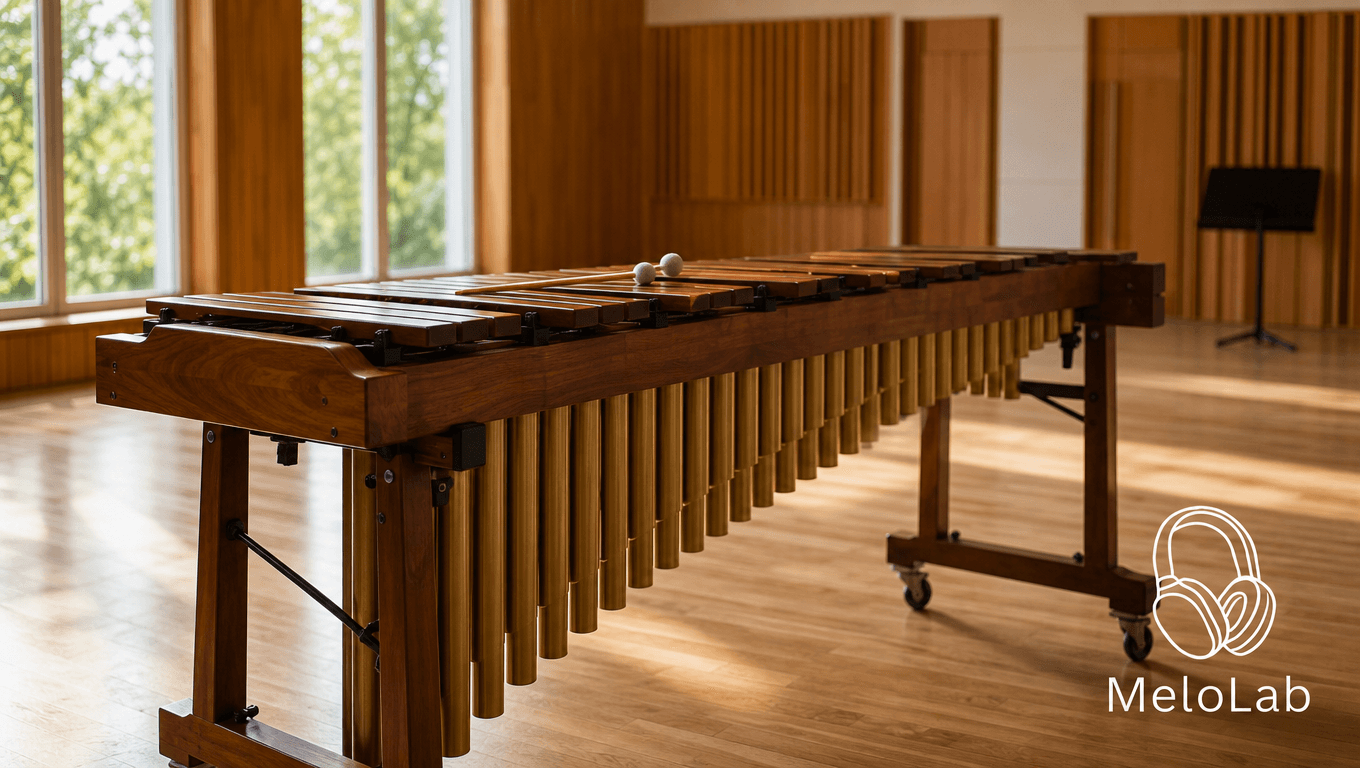
The marimba is a percussion instrument of extraordinary beauty and versatility, producing tones that are at once percussive and melodic, rhythmic and lyrical. Its sound is created by striking wooden bars with yarn- or rubber-wrapped mallets, with resonator tubes beneath each bar amplifying and enriching the fundamental tone. The result is a warm, woody resonance that is gentler and more sustained than the bright, sharp attack of a xylophone — a sound that has been described as the closest thing to a singing wooden voice. The marimba's African origins are ancient, with precursor instruments dating back centuries and still central to musical traditions across West and Central Africa, Central America, and Southeast Asia. The modern Western marimba, with its five-octave range and four-mallet technique, has become one of the most important solo instruments in contemporary classical percussion, capable of performing complex polyphonic music, delicate arpeggios, and driving rhythmic patterns with equal facility.
Marimba music spans a rich variety of genres and traditions. Classical percussion repertoire has grown enormously since the mid-twentieth century, with composers writing solo and chamber works that exploit the marimba's full range and four-mallet capabilities — pieces by Keiko Abe, Steve Reich, and Joseph Schwantner have established the instrument as a serious concert voice. Minimalist music has embraced the marimba for its ability to sustain hypnotic, repetitive patterns with subtle timbral variation, creating trance-like textures that reward deep listening. African marimba traditions — particularly the gyil of the Dagara people and the timbila of the Chopi people — feature interlocking rhythmic patterns and call-and-response structures that are both complex and deeply communal. Latin American folk traditions use the marimba for dance music, celebrations, and community gatherings, with bright, syncopated patterns that are irresistibly rhythmic. Ambient and meditation music have also found a place for the marimba, using its warm, sustained tones as the basis for calming, contemplative soundscapes.
MeloLab's AI marimba music generator captures the instrument's distinctive warm resonance and percussive articulation across these diverse traditions. The model produces marimba performances with realistic mallet attack, natural decay, and the instrument's characteristic woody tone. Whether you need a minimalist solo, an African rhythmic pattern, or a Latin groove, the AI generates original marimba music with authentic technique and musical sensitivity.
For the best marimba tracks, specify the musical tradition and character in your prompt. "Contemporary minimalist marimba solo with four-mallet chords and slowly shifting harmonies" differs from "West African gyil-inspired pattern with interlocking rhythms" or "cheerful Latin marimba groove with congas." Describe the mallet technique — "soft mallets for warm, sustained tone" versus "harder mallets for brighter, more percussive attack" — since this shapes the timbre significantly. Mention the tempo and whether you want a solo performance or accompaniment with other percussion. For meditation or ambient use, indicate the pace and atmosphere you are seeking, and the AI will tailor its patterns and dynamics accordingly.