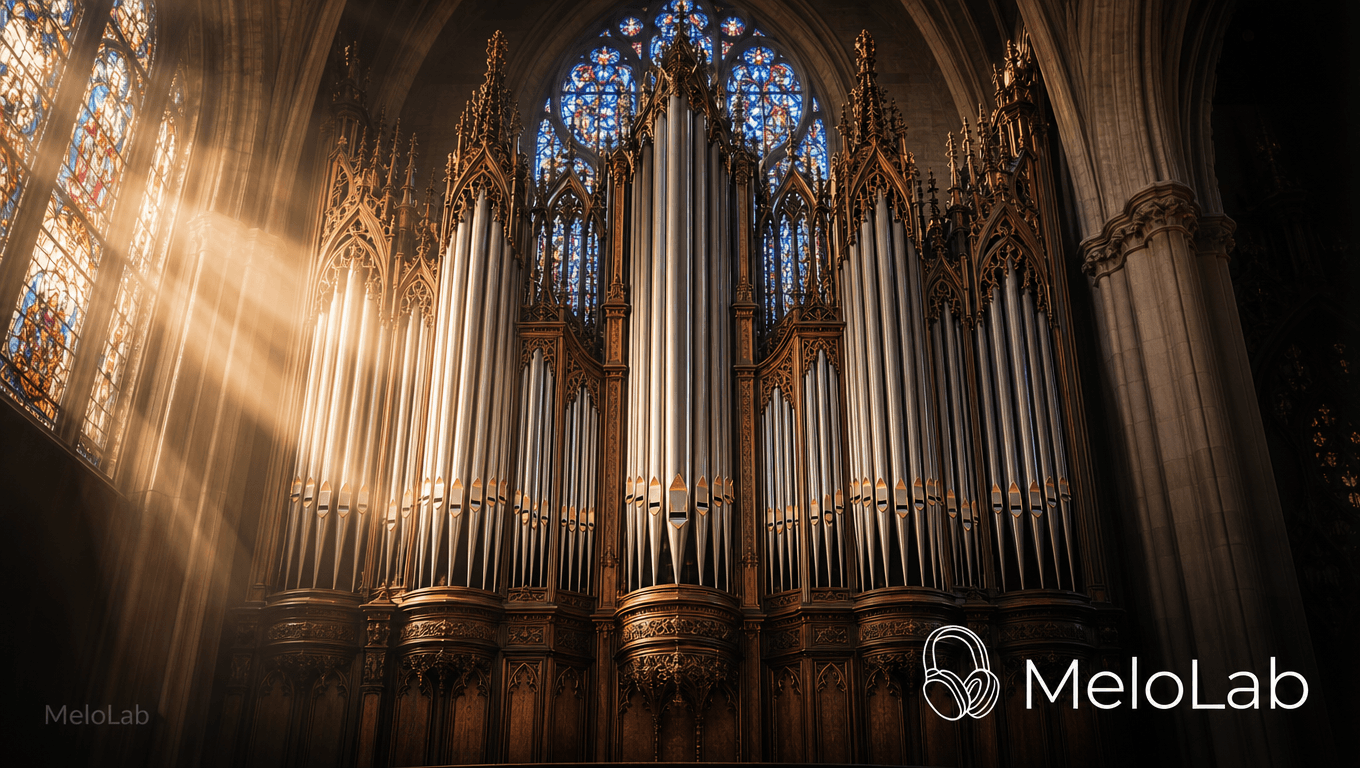
The organ is one of the most awe-inspiring instruments ever built — a machine of pipes, wind chests, and keyboards capable of filling a cathedral with sound that seems to emanate from the architecture itself. The pipe organ's history stretches back to ancient Greece, but it was during the Baroque era that the instrument reached its zenith, with builders like Arp Schnitger and Silbermann creating instruments of extraordinary beauty and complexity. The organ is unique among keyboard instruments in that its sound sustains as long as keys are held, giving it a legato capability and sustained power that no piano can match. Add the pedal board — a keyboard played with the feet — and a single organist can produce the equivalent of an entire orchestra, controlling multiple ranks of pipes through drawknobs and stops that shape the tone color with extraordinary precision. From the whisper of a single flute stop to the thunder of full organ with all stops engaged, the instrument commands an unparalleled dynamic and timbral range.
Organ music occupies a central place in several genres. Classical and Baroque organ music represents some of the greatest keyboard compositions ever written — Bach's fugues, toccatas, and chorale preludes are cornerstones of the Western canon, exploiting the instrument's polyphonic capabilities with unmatched genius. Church music has been intertwined with the organ for centuries, from hymn accompaniment and liturgical preludes to the grand improvisations that accompany religious services around the world. Gospel music transformed the organ into a vehicle of ecstatic expression, with the Hammond B3 and its Leslie speaker creating the swirling, percussive sound that powers gospel choirs and worship services. Theatre organ — the "Mighty Wurlitzer" — brought the organ into popular entertainment, accompanying silent films with dramatic, colorful registrations. Progressive rock bands like Emerson, Lake and Palmer and Deep Purple introduced the organ to stadium audiences with virtuosic, high-energy performances.
MeloLab's AI organ music generator understands the instrument's diverse traditions and produces performances with authentic registration, pedal technique, and the sustained, commanding presence that defines organ music. The model distinguishes between the transparent counterpoint of a Baroque fugue and the soulful swirl of a gospel Hammond, generating original compositions that honor each tradition's conventions.
For the best organ music, specify the organ type and genre. "Baroque pipe organ fugue with four-voice counterpoint" differs from "gospel Hammond organ with Leslie speaker and jazz chords" or "theatre organ with orchestral registration." Describe the registration or tone color you want — "soft flute stops for a meditation" versus "full plenum with reeds and mixtures for a procession." Mention the tempo and structural character: "stately and ceremonial," "virtuosic and contrapuntal," or "soulful and improvisational." If you need accompaniment, specify whether the organ should be solo or paired with choir, brass, or a rhythm section.